How Much to Deposit on a Secured Credit Card
My take: don’t overfund your first secured card
A secured card is a tool, not a status symbol. I’d usually rather see a newcomer put $200 to $500 into a good secured card, use it lightly, pay it perfectly, and keep extra cash in the bank than tie up $2,000 chasing a bigger credit limit.
That deposit is refundable, yes. But it’s still locked up while the account is secured. If you’ve just moved to the US on an H-1B, L-1, F-1, or as a new permanent resident, cash flexibility matters. Rent deposits, furniture, car insurance, winter clothes, DMV fees — the first few months here can be annoyingly expensive.
The trick is to deposit enough to make the card usable without creating a utilization mess. For most credit beginners, that means starting with a secured card that reports to the credit bureaus, has a $0 annual fee, and ideally earns rewards. Then you treat it like a debit card with homework: small purchases, paid in full, every month.
How secured card deposits actually work
A secured credit card requires a refundable security deposit. In many cases, that deposit sets your credit limit. Put down $200, get a $200 line. Put down $500, get a $500 line. Some cards are a little more flexible: the Capital One Platinum Secured Credit Card, for example, has a $0 annual fee and can offer at least a $200 credit line with an initial deposit of $49, $99, or $200, depending on creditworthiness.
The issuer holds the deposit as collateral. You still receive a monthly bill. You still need to pay by the due date. And if you carry a balance, you can be charged interest just like on a regular credit card. The deposit is not a prepayment, and it does not automatically cover your monthly charges.
The point of the card is credit reporting. Secured cards are designed to help you establish or rebuild credit history by reporting your activity to the major credit bureaus. That reporting is what eventually helps you qualify for better unsecured cards, higher limits, apartment approvals, auto loans, and in some cases lower insurance costs.
The deposit math: $200 vs. $500 vs. $1,000
Here’s the practical issue: utilization. If your card has a $200 limit and your statement closes with a $160 balance, you’re using 80% of your limit. That can make you look risky, even if you pay in full after the statement posts.
A bigger deposit gives you breathing room. But bigger is not always better.
Let’s say you spend about $600 per month on normal expenses and want to build credit with a secured card. If you deposit $200 and put all $600 on the card, you’ll have to pay it down multiple times per month to keep your reported balance low. That’s doable, but annoying.
If you deposit $500, you could charge $150, pay it off, charge another $150, pay it off, and let a small balance like $20 to $50 report at statement close. That’s much easier. If you deposit $1,000, you get even more cushion, but the extra $500 may not do much for you if you’re disciplined and only using the card for groceries, gas, streaming, or transit.
My rule of thumb: if cash is tight, start at the minimum deposit. If you can comfortably spare more, $300 to $500 is a sweet spot. I’d only go to $1,000 or more if you know you’ll need the limit and you won’t miss the cash.
A worked example: picking the right deposit and card
Say Priya just arrived in the US on an H-1B. She has a job, a checking account, and an ITIN or SSN path in progress, but no US credit score yet. She wants one starter card and spends about $400 per month on groceries, dining, rideshare, and household items.
Option one: she gets the Capital One Quicksilver Secured Cash Rewards Credit Card with a $200 refundable deposit. It has a $0 annual fee and earns unlimited 1.5% cash back. If she puts $400 per month on it, she earns $6 per month, or $72 per year. Nice, but with only a $200 limit, she needs to make extra payments during the month or her utilization may look high.
Option two: she deposits $500 instead, if approved for that limit. Same $400 monthly spend, same $72 cash back for the year, but her utilization is easier to manage. A $50 statement balance on a $500 limit is 10%. A $50 balance on a $200 limit is 25%. Same spending, different credit optics.
Option three: she uses the Discover it® Secured Cash Back card. It has a $0 annual fee, a refundable security deposit as low as $49 for a $200 credit line, 5% cash back on everyday purchases in rotating categories up to a quarterly maximum upon activation, and 1% on other purchases. Discover also automatically matches all cash back earned at the end of the first year, with no limit.
If she earns $80 in cash back during year one on Discover, the first-year match makes that $160 total. That can beat a flat 1.5% card. The trade-off is that rotating categories require activation and attention. If she doesn’t want to track categories, the Quicksilver Secured is simpler.
Best secured cards by use case
For most beginners, I’d start by filtering out any secured card with an annual fee unless there’s a very specific reason to keep it. The mainstream cards in this space give you enough options with $0 annual fees.
The Discover it® Secured Cash Back card is the most interesting rewards play. The $0 annual fee is right, the deposit can be as low as $49 for a $200 credit line, and the first-year Cashback Match can make year-one rewards unusually strong for a secured card. The catch is that Discover acceptance can be less universal than Visa or Mastercard, especially with some smaller merchants or outside the US. For everyday US use, it’s still a strong pick.
The Capital One Platinum Secured Credit Card is the plain builder. $0 annual fee, no rewards, and the potential for a $200 line with a $49, $99, or $200 deposit depending on creditworthiness. I like it if your only goal is to get a reporting account open with as little cash tied up as possible. I don’t love it if you can qualify for a no-fee secured card that earns rewards.
The Capital One Quicksilver Secured Cash Rewards Credit Card is cleaner for people who hate category games. It has a $0 annual fee, requires a minimum refundable deposit of $200, and earns unlimited 1.5% cash back on every purchase. That’s easy. No activation calendars, no chosen categories, no quarterly mental load.
The Bank of America® Customized Cash Rewards Secured Credit Card is powerful if your spending fits. It has a $0 annual fee and a minimum security deposit of $200. It earns 6% cash back in a chosen category for the first year, from options such as gas, online shopping, dining, and travel; 2% at grocery stores and wholesale clubs; and 1% on everything else. The higher earning is capped at up to $2,500 in combined quarterly purchases. After the first year, the chosen-category rate reverts to 3%, while the 2% categories remain as described in the current terms.
That first-year 6% rate can be excellent. Spend $500 per month in your chosen category for 12 months and that’s $6,000 of annual spend. Because the cap is $2,500 per quarter, $1,500 per quarter fits under the cap. At 6%, that’s $360 back before counting other purchases. Compare that with 1.5% on the same $6,000, which is $90. Big difference. But only if you actually spend in the chosen category and manage the cap.
The Citi® Secured Mastercard® is more of a no-frills credit-building card. It has a $0 annual fee, requires a security deposit between $200 and $2,500, and the credit limit matches the deposit. It reports to all three major credit bureaus and offers free access to your FICO® Score online. I’d consider it if you value the Citi relationship or want a straightforward Mastercard, but rewards seekers will find better options.
The U.S. Bank Cash+® Secured Visa® Card is the high-ceiling category card. It has a $0 annual fee and a security deposit range of $300 to $5,000. It earns 5% cash back on the first $2,000 in combined purchases in two chosen categories each quarter, 2% on one everyday category like gas or groceries, and 1% on other eligible purchases. This can be very good for organized people. It is not the card I’d hand to someone who already feels overwhelmed by US banking.
Newcomer specifics: SSN, ITIN, and thin files
If you already have an SSN, use it on the application. That’s the cleanest route for credit reporting and future account matching.
If you don’t have an SSN, many major US issuers, including Capital One, Bank of America, Citi, Discover, and U.S. Bank, accept an Individual Taxpayer Identification Number in place of an SSN for credit card applications, especially secured cards. That matters for F-1 students, H-1B and L-1 workers, spouses, and new immigrants who may be financially stable but invisible to the US credit system.
If you have neither an SSN nor an ITIN yet, your options shrink. I wouldn’t randomly apply everywhere and collect denials. Check the issuer’s current application requirements, consider opening a checking account first, and apply once you have the identification the issuer accepts. A thin file is not the same thing as bad credit, but banks still need to verify who you are.
One common newcomer mistake is assuming your credit history from India, Canada, the UK, or another country automatically transfers. Usually, it doesn’t work that way for mainstream US card underwriting. Your income may help, your bank relationship may help, but your US credit file still starts close to zero.
The first-card sequence I’d use
Start with one secured card. Not three. One.
Use it for predictable expenses: groceries, mobile phone bill, transit, coffee, maybe subscriptions. Keep the balance low. Pay on time every single month. If your limit is tiny, make mid-cycle payments so the statement doesn’t close with a maxed-out balance.
After several months of clean history, reassess. Has the issuer offered a path to an unsecured card or deposit return? Are you now eligible for an entry-level unsecured card? Has your income, SSN/ITIN situation, or address stability improved? That’s when a second card can make sense.
What I would not do: open a secured card, carry a balance because you think interest helps your score, and apply for multiple travel cards two months later. Paying interest does not build credit faster. It just makes the bank richer.
Common mistakes that slow people down
The biggest mistake is treating the deposit like a spending balance. If you put down $200 and charge $200, you still owe $200. Miss the payment and you can damage the very credit profile you’re trying to build.
The second mistake is using too much of a low limit. A $190 statement balance on a $200 card looks ugly, even if you’re financially fine. Pay before the statement closes if needed.
The third mistake is ignoring category caps. The Bank of America secured card’s higher rewards apply up to $2,500 in combined quarterly purchases. The U.S. Bank Cash+ secured card’s 5% categories apply to the first $2,000 in combined purchases each quarter. Discover’s 5% categories require activation and have a quarterly maximum. Rewards are great, but only inside the rules.
The fourth mistake is paying an annual fee for no reason. In this lane, $0 annual fee cards are widely available. If a secured card charges a fee and doesn’t offer something unusually valuable, I’d pass.
Frequently asked questions
Is a secured card worth it if I have no US credit history?
Yes, if it reports to the major credit bureaus and you use it responsibly. For newcomers and credit beginners, a secured card can be the bridge from no file to a real credit profile. The key is on-time payments and low utilization, not big spending.
How much should I deposit on my first secured credit card?
For most people, $200 to $500 is enough. Use the minimum if cash is tight. Consider $300 to $500 if you want more room to keep utilization low. I’d be cautious about tying up $1,000 or more unless you have plenty of emergency savings.
Can I apply for a secured card with an ITIN instead of an SSN?
Often, yes. Major issuers including Capital One, Bank of America, Citi, Discover, and U.S. Bank may accept an ITIN in place of an SSN for credit card applications, particularly for secured cards. Always check the issuer’s current application requirements before applying.
Which is better: rewards or the lowest deposit?
If money is tight, prioritize the lowest deposit and $0 annual fee. If you can comfortably deposit at least $200 and manage categories, rewards can be worth chasing. I’d rather have a simple no-fee card used perfectly than a complicated rewards card used badly.
Bottom line
A secured card is one of the most practical ways to build US credit from zero, especially if you’re new to the country and can apply with an SSN or ITIN. Don’t overthink it, but don’t be careless either.
My default pick for rewards-minded beginners is a $0 annual fee secured card with a manageable deposit and useful cash back. Discover is compelling for first-year upside, Capital One Quicksilver Secured is great for simplicity, Bank of America and U.S. Bank can be strong for category optimizers, and Citi is a straightforward bureau-reporting option.
Deposit enough to keep utilization sane, pay in full, and let time do its job. That boring six-to-twelve-month stretch is often what gets you from secured-card beginner to real unsecured-card approvals.
Keep reading
- Secured Cards
How to Pick a Secured Card With No Credit History
A practical secured-card guide for US newcomers, students, visa workers, and credit beginners—SSN/ITIN paths, deposits, rewards, and sequencing.
- Secured Cards
Best Secured Credit Cards of 2026
The best secured credit cards for building or rebuilding credit — with real rewards and a path to upgrade.
- Credit for Immigrants
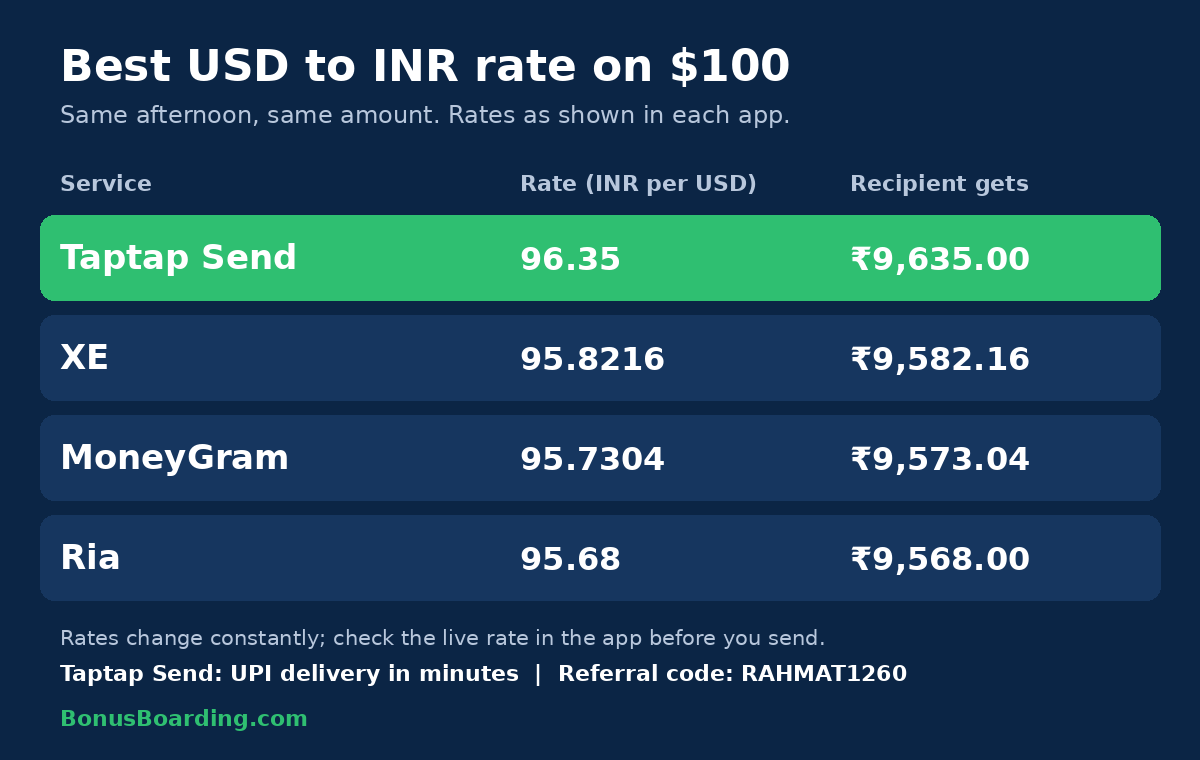
Taptap Send Review: Best USD to INR Rate Compared
What Taptap Send is, how US-to-India transfers work, and how its USD to INR rate compared with XE, MoneyGram and Ria on the same afternoon.
Join the discussion
Share your take, ask a question, or swap tips with other readers. Be kind — we moderate.