Avis Toll Nightmare: What Renters Should Do Now
The Avis toll mess is a warning, not a one-off
The scary part of the latest Avis toll story isn’t just that a renter was reportedly billed thousands of dollars after a previous customer stole the car’s toll transponder and kept using it. It’s that the whole setup makes the innocent renter feel guilty until proven innocent. Honestly, I’d check your rental agreement’s toll policy before every trip — this is the kind of thing that bites people once and never again.
Rental car toll systems are built for speed and automation. That’s great when you blow through a cashless toll gantry and the charge posts cleanly a few days later. It’s awful when the device tied to the vehicle is missing, stolen, swapped, misread, or still being used by someone who no longer has the car.
The practical takeaway: before you drive away in a rental car, treat the toll transponder like you treat the fuel level and damage photos. Check it. Photograph it. If it’s missing, open, loose, broken, or doesn’t match what the agent told you, stop and get it documented before leaving the lot.
That sounds annoying. It is. But arguing with a rental car company after a giant toll bill hits your card is much worse.
What reportedly happened with Avis
The reported Avis case is the kind of travel headache that makes people swear off rental cars. A renter was charged thousands of dollars in tolls that allegedly came from a transponder that had been stolen by a prior customer. The stolen transponder kept getting used, and the charges landed on the wrong person’s rental record.
I’m not going to pretend this is a normal toll fee dispute. This isn’t “I forgot to close the rental car’s transponder box and got charged a convenience fee.” This is a systems failure: the rental company’s toll account, the toll processor, and the vehicle assignment data didn’t catch that the physical device had left the car.
And that’s exactly why travelers need to protect themselves upfront. Rental car companies process huge volumes. Toll platforms run on plates, device IDs, rental windows, and automated matching. When something is wrong in that chain, your credit card can become the collection bucket.
The rental car toll trap
Most major rental companies offer an electronic toll option. Avis has its e-Toll service in many markets. Hertz, Enterprise, National, Budget, Alamo, and others have similar setups. The terms vary by state, brand, and toll processor, but the general structure is familiar: you pay the tolls plus some kind of convenience or service fee when the system is used.
Those fees are usually annoying rather than catastrophic. Think several dollars per day on days you incur tolls, often with some kind of cap per rental period. But the details change, and you should verify current terms with the rental company before your trip.
The bigger problem is that cashless tolling has removed the old “just pay at the booth” option in many places. In cities like Orlando, Miami, Dallas, Denver, Boston, New York, and parts of California, it’s easy to hit toll roads without meaning to. Sometimes the route your phone recommends is the route that makes your rental company money.
If the car has a transponder, you need to know whether it’s active, whether it can be closed, and whether using it triggers a rental toll plan. If you bring your own transponder, you need to know whether the rental car’s device can be shielded or disabled. If the vehicle has no device, license plate tolling may still route through the rental company with fees attached.
None of this is intuitive at 11:30 p.m. in an airport garage after a delayed flight.
What you should do before leaving the lot
Start with the boring stuff. Take a quick video as you walk around the car. Capture the license plate, odometer, fuel or battery level, existing damage, and the windshield area where a toll transponder would normally sit. If there’s a toll box, open and close it on camera if it’s designed to do that. If there’s no transponder, say that in the video.
Then check the rental agreement. Does it mention a toll product? Did the agent opt you in? Did you decline? Are you renting in a state where the toll program is automatic if you use a cashless lane? If you don’t know, ask before you leave.
If anything looks off, go back to the counter or exit booth and get it noted. Don’t rely on “you should be fine.” You want a new car or a written note in the rental record that the transponder was missing, damaged, or not present at pickup.
This is especially important if the car has a removable transponder. A stolen or missing device is not your problem, but it can become your problem if the first time anyone hears about it is after the toll processor sends a bill.
A worked example: how a small toll day becomes a big headache
Say you rent a car in South Florida from Friday morning to Monday morning. You drive from Miami to Key Largo, use a couple of toll roads, and rack up $18 in legitimate tolls. You don’t love paying a rental toll convenience fee, but maybe the final toll bill is something like the actual tolls plus a daily service fee for the days you used toll roads. The exact fee depends on the company and location, so check the terms.
Now imagine the transponder assigned to your rental car was stolen before you picked up the vehicle. Someone else is driving around for weeks using that device. The toll platform sees the transponder ID and keeps billing the rental company account. The rental company’s system looks at dates, devices, plates, and rentals and decides those charges belong to you.
Your real toll exposure should be around $18 plus the disclosed rental toll fees. Instead, you wake up to hundreds or thousands of dollars in charges. Your bank app doesn’t know the difference. It just sees Avis or a toll processor hitting the card you provided.
That’s why your evidence matters. A pickup video showing no transponder in the car, a written note from the exit booth, and your actual driving route are much stronger than a phone call weeks later saying, “That wasn’t me.”
Will your credit card protect you?
Not in the way most people hope.
Premium travel cards often include rental car collision damage waiver coverage. That can be very valuable if the car is damaged or stolen. But toll charges, administrative fees, traffic tickets, fuel charges, and similar rental add-ons generally aren’t what that coverage is for. Your Chase, Amex, Capital One, or Citi rental car protection is not a magic eraser for a bad toll bill.
A credit card dispute can still be useful, but it’s not step one. If you immediately dispute the charge without working the rental company’s process, you may get a temporary credit and then lose when Avis or the toll processor submits paperwork. Better approach: gather documentation, request an itemized toll report, ask for the transponder ID, plate images if available, toll locations, dates, and times, then escalate in writing.
If the tolls happened after your rental ended, before it began, or in places you couldn’t plausibly have driven, say that plainly. If the tolls were tied to a transponder that wasn’t in the vehicle, ask the company to confirm when that device was last physically verified.
If the charge is large, don’t be shy about escalating to executive customer service, filing a complaint with your state attorney general, the state where you rented, or the relevant consumer protection agency. For a truly absurd bill, small claims court may be more realistic than waiting through endless call center loops.
How to avoid rental toll fees without creating a new mess
If you have your own E-ZPass, SunPass, TxTag, FasTrak, or other regional transponder, bringing it can save money. But don’t just toss it in the car and hope.
Add the rental car plate to your account if the toll agency allows it. Set the correct start and end dates. Remove the plate immediately after returning the car. Keep screenshots. Make sure the rental car’s own transponder is closed, shielded, or not present, depending on the system. If both your device and the rental car device are read, you may have a double-billing fight.
Also be honest about convenience. If you’re landing late, driving in an unfamiliar city, and taking toll roads every day, paying the rental company’s toll program may be the least bad option. I don’t like the fees, but I like missed toll penalties and post-trip chaos even less.
The mistake is not choosing convenience. The mistake is choosing it accidentally.
Singapore Airlines award sale skips the U.S.
Singapore Airlines is running another award sale, but U.S. flyers don’t get the fun this time. The latest list reportedly doesn’t include U.S. routes, which makes this one mostly a shrug for readers sitting on Chase Ultimate Rewards, Amex Membership Rewards, Capital One miles, Citi ThankYou points, or Bilt points hoping for a discounted Singapore Suites or long-haul business class redemption.
That doesn’t mean KrisFlyer is useless. Singapore remains a transfer partner of the major transferable currencies, and the program can be valuable when saver space appears. But a promo sale without U.S. routes is not a reason to speculatively transfer points.
That’s the rule I’d stick to: don’t move flexible points into KrisFlyer unless you have a specific award ready to book. Transfers are generally one-way, and Singapore miles have expiration rules that are less forgiving than some U.S. programs.
Marriott and Starbucks are serving crumbs
Marriott Bonvoy and Starbucks have been doing linked-account promos, and the latest bonuses are tiny. If you’re already buying coffee and already staying with Marriott, sure, link the accounts and collect the spare points. Free is free.
But don’t let a small Bonvoy bonus change your behavior. Marriott points are useful, but they’re not so valuable that you should manufacture coffee runs or choose a pricier hotel just to trigger a minor promo. This is couch-cushion earning, not a strategy.
The smarter play is to use the right card for the purchase. At Starbucks, that may be a card that bonuses dining or mobile wallet purchases, depending on how you pay. At Marriott, use a Marriott card if you value the elite-night and points package, or a premium travel card if you want broader trip protections. The linked-account bonus is the garnish, not the meal.
Air Canada adds a Québec City café lounge
Air Canada has opened a new café-style lounge in Québec City, which is good news for eligible passengers but not something most U.S. travelers should overrate.
Air Canada’s café concept is more grab-and-go than traditional lounge sprawl. That can be perfect for a quick connection or early departure: coffee, snacks, a calmer place to sit, and less of the full buffet theater. Access rules can depend on cabin, Aeroplan elite status, Star Alliance Gold status, eligible credit cards, and itinerary, so check the current Air Canada terms before assuming you’re in.
For U.S. points people, the angle is simple. Aeroplan continues to be one of the most useful Star Alliance programs because it partners with Amex, Chase, Capital One, and Bilt. A better ground experience in Québec City is a nice add-on if you’re already flying Air Canada. It’s not a reason to force a routing.
Bahamas jet ski warning deserves attention
Travelers heading to the Bahamas should pay attention to the renewed warnings around jet ski rentals. The U.S. government has repeatedly cautioned visitors about safety concerns tied to some water sports operators, including reports involving reckless operation, poor regulation, injuries, and alleged assaults.
This is one of those vacation decisions where “everyone’s doing it” is terrible due diligence. If you’re booking an excursion, use reputable operators, ask your hotel for vetted recommendations, check recent reviews, and don’t hand over your passport or large cash deposits casually. If something feels off, walk away.
Also check your travel insurance. Many policies exclude or limit coverage for certain adventure activities, alcohol-related incidents, or unlicensed operators. Credit card travel protections may not help much if you voluntarily rent equipment from a sketchy beach vendor.
JSX Scottsdale deal: good if the route fits
JSX is offering a 50% discount on flights to Scottsdale, according to the latest deal chatter. JSX can be a legitimately pleasant option: smaller terminals, faster boarding, roomier seating than many regional jets, and a semi-private feel without private-jet pricing.
The catch is network and price. Even half off doesn’t automatically make it cheap, and JSX only works if its schedule and airports fit your trip. Compare the final fare against Southwest, American, Delta, United, and Alaska, including bags, seat fees, airport convenience, and the value of your time.
If JSX saves you a connection or lets you use a much easier airport, the deal can be compelling. If it’s still more expensive and less convenient than a nonstop on a major carrier, don’t get dazzled by the “semi-private” marketing.
The thread connecting all of these items is control. Rental car toll systems, award sales, micro-bonuses, lounge access, beach excursions, and boutique flight deals all sound simple until the terms bite. Read the rules before you’re committed, keep receipts and screenshots, and don’t assume a big travel brand’s automated system will get it right.
Bottom line
Keep reading
- Travel Cards
Best Travel Credit Cards: How to Choose the Right One in 2026
Travel cards fall into a few clear types. Here's how to choose between flexible-points, airline, hotel, and premium cards based on how you actually travel.
- Credit for Immigrants
Taptap Send Review: Best USD to INR Rate Compared
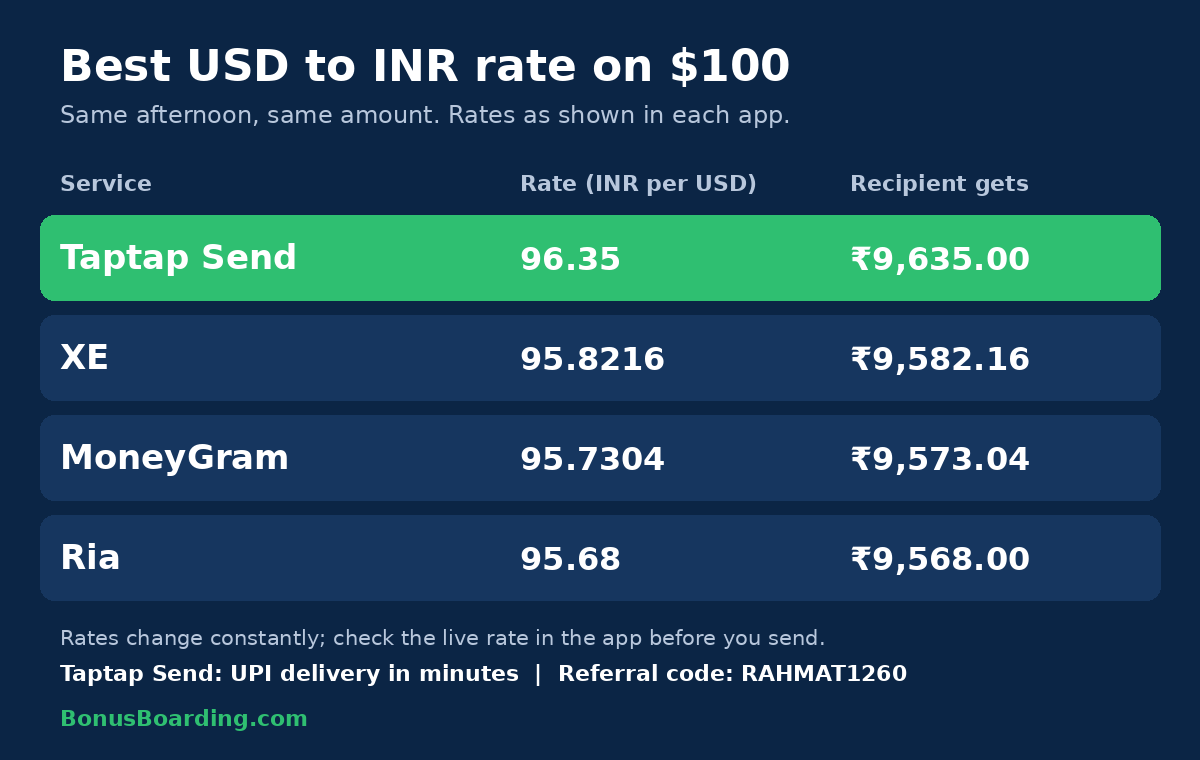
What Taptap Send is, how US-to-India transfers work, and how its USD to INR rate compared with XE, MoneyGram and Ria on the same afternoon.
- Build Credit
How to Build US Credit From Zero: Secured Cards, Loans, and Quick Wins
No SSN? Thin file? Here's the honest, step-by-step roadmap to building US credit fast — with real numbers and card picks for newcomers.

Join the discussion
Share your take, ask a question, or swap tips with other readers. Be kind — we moderate.