Chase Ink Business Preferred® Credit Card Review 2026 — Is It Worth It?
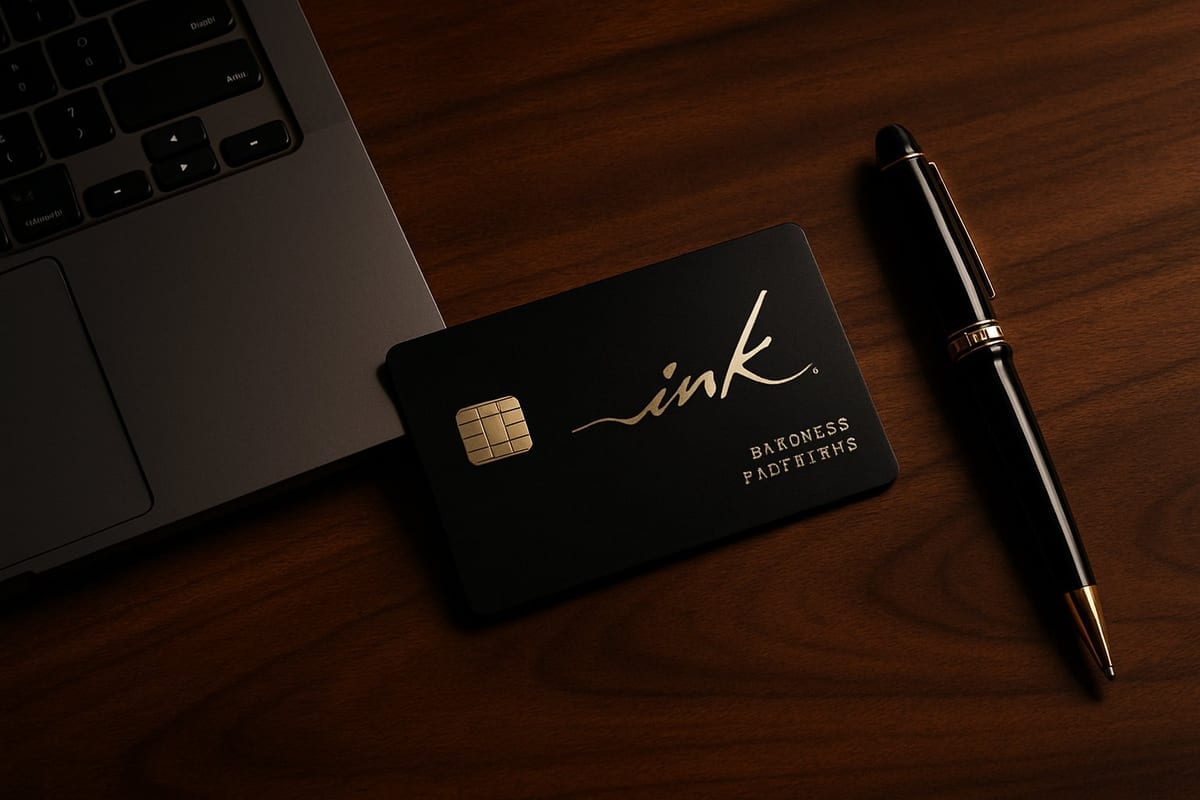
If you've got a business — even a side hustle — this is the one card I'd tell you not to skip. Huge bonus, tiny fee, real points.
Overview
I'll be blunt: if you run any kind of business — even a one-person side hustle flipping stuff online — and you're not looking hard at the Ink Business Preferred, you're probably leaving money on the table. I've pointed more friends toward this card than any other, and the reason is simple. Ninety-five bucks a year, a welcome bonus that's recently been sitting at 100,000 points, and those points aren't some locked-in store currency — they're full Chase Ultimate Rewards, the same ones the Sapphire crowd obsesses over.
What I genuinely like about it is that the bonus categories match how a small business actually spends in 2026. Shipping, online ads, your internet and phone bill, travel — 3x on all of it. The first time I ran a month of ad spend through a card like this and watched the points pile up, it clicked for me. And the cell phone protection quietly earns its keep: one cracked screen and you've made back the fee several times over.
Key Benefits
- 3x Ultimate Rewards points on the first $150,000 spent each account year across a combined set of business-relevant categories: travel; shipping purchases; advertising purchases with social media sites and search engines; and internet, cable, and phone services
- Points transfer 1:1 to all Chase travel partners (United, World of Hyatt, Air Canada Aeroplan, British Airways Avios, Southwest, and more) — the same partners as the Sapphire cards
- Points are worth 25% more when redeemed for travel through Chase Travel, giving every point a reliable redemption floor
- Cell phone protection: up to $1,000 per claim (with a deductible) against damage or theft when you pay your monthly phone bill with the card — a benefit that alone can justify the fee
- Strong purchase and travel protections: purchase protection, extended warranty, primary rental car coverage when renting for business, and trip cancellation/interruption insurance
- Free employee cards, so all company spending funnels into one rewards pool
- No foreign transaction fees on international business purchases or travel
Rewards Structure
The 3x categories are deliberately chosen for how modern businesses spend. The biggest opportunity for most owners is advertising with social media and search engines — if you run Facebook, Instagram, or Google ad campaigns, that spend earns 3x up to the $150,000 annual cap. Shipping is the second heavy hitter for e-commerce sellers, and internet/cable/phone covers a recurring monthly bill almost every business pays.
Travel rounds out the 3x categories, and because the points are full Ultimate Rewards, they behave exactly like Sapphire points: transfer them to World of Hyatt for outsized hotel value, or to United and Aeroplan for international flights. A business owner who also holds a Sapphire card can pool everything together for maximum flexibility.
Everything outside the bonus categories earns 1x, so the Ink Business Preferred is best paired with a flat-rate card (or the no-fee Ink Business Unlimited at 1.5x) for non-category spend. Many small-business owners run the Ink trio together to cover every type of purchase at a strong rate.
Annual Fee Breakdown
At $95 a year the fee is trivial relative to the value on offer. The welcome bonus alone — recently 100,000 points worth at least $1,250 toward travel through Chase Travel, and often far more via transfer partners — dwarfs more than a decade of annual fees in a single year. For most applicants the first-year math is overwhelmingly positive.
Beyond the bonus, the cell phone protection is the standout ongoing offset. A single cracked-screen or stolen-phone claim (up to $1,000, minus a small deductible) can return many times the annual fee, and it covers you and your employees listed on the bill simply for paying the phone bill with the card. For ongoing value, the 3x categories do the heavy lifting: a business spending even $2,000–$3,000 a month in shipping, ads, and connectivity earns enough bonus points to cover the fee many times over.
Who Should Get This Card
- Small-business owners, freelancers, and side-hustlers who spend meaningfully on shipping, online advertising, or connectivity and want premium, transferable points
- Anyone in the Chase ecosystem who wants to feed a single Ultimate Rewards pool — the Ink Business Preferred pairs perfectly with a personal Sapphire card
- Businesses that want strong cell-phone protection and travel coverage without paying a premium annual fee
- Owners chasing a large, high-value welcome bonus to fund travel
Who Should Skip This Card
- People without any business activity — a sole-proprietor side hustle qualifies, but you do need legitimate business spending to apply honestly
- Anyone already at or near Chase's 5/24 limit (five new cards across all issuers in 24 months), since Chase will typically decline the application
- Businesses that only want simple cash back with no interest in travel points — a flat-rate cash-back business card may be a cleaner fit
- Those who can't meet the $8,000 spending requirement for the welcome bonus within three months without manufacturing spend
How It Compares to Alternatives
Against the no-fee Chase Ink Business Unlimited and Ink Business Cash, the Preferred is the one that unlocks transfer partners and the 25% travel boost — the no-fee Inks earn cash back (or points only redeemable at 1 cent each unless paired with a Preferred or Sapphire). The classic play is to hold a no-fee Ink for everyday 1.5x or category spend and the Preferred to make all those points transferable.
Against the American Express Business Gold, the Ink Business Preferred has a much lower fee and a simpler, larger bonus, while the Amex Business Gold offers higher 4x earning on your top two categories. For most small businesses, the Ink Business Preferred delivers more value per dollar of fee.
Against the Capital One Spark Miles for Business, the Ink Business Preferred wins on transfer-partner quality within the U.S. and on the cell-phone and travel protections, while Spark offers a flat 2x on everything for owners who prefer simplicity over category optimization.
Frequently Asked Questions
Do I need an LLC or registered business to apply?
No. Chase issues the Ink Business Preferred to sole proprietors, who can apply using their own name as the business name and their Social Security number as the tax ID. Freelance work, gig income, reselling, consulting, and other side hustles generally qualify as a business. You should have genuine business activity and report income honestly, but a formal LLC or EIN is not required.
What is the $150,000 cap on 3x earning?
The card earns 3x points on the first $150,000 in combined spending across all bonus categories (travel, shipping, advertising, and internet/cable/phone) each account anniversary year. After you hit $150,000 in those categories, additional spend earns 1x. The cap resets every account year, and for most small businesses it is high enough that they never reach it.
How does the cell phone protection work?
When you pay your monthly cell phone bill with the Ink Business Preferred, you and the employees listed on that bill receive protection against damage or theft, up to $1,000 per claim and a set number of claims per year, minus a deductible (recently $100). It's one of the most generous cell-phone benefits of any card and frequently returns more than the annual fee in a single claim.
Does the 5/24 rule apply to this card?
Yes. Chase will generally decline your application if you have opened five or more personal credit cards across all banks in the past 24 months. Importantly, the Ink Business Preferred itself usually does not add to your 5/24 count once approved, because business cards typically don't report to your personal credit report — which is why many points enthusiasts open business cards strategically.
Final Verdict
Here's my honest take after years of carrying Chase cards: the Ink Business Preferred is the one I'd hand to anyone with a business, full stop. Low fee, an enormous bonus, transferable points, categories that fit real spending, and phone insurance that pays for itself. Nothing else at this price comes close.
Two practical notes before you apply. Make sure you're under Chase's 5/24 limit, and have a real plan to hit the $8,000 spend for the bonus — for most owners that's a couple of months of normal expenses, not a stretch. Get those two things right and this is very likely the most valuable card you'll open all year.
This review reflects publicly available information and our independent opinion; American Express, Chase, Citi, and Discover did not provide or approve it. Card terms, fees, and offers change — always confirm current details on the issuer's site before applying. bonusboarding.com may earn a commission if you apply through our links.
Join the discussion
Share your take, ask a question, or swap tips with other readers. Be kind — we moderate.