How Credit Utilization Affects Your Credit Score
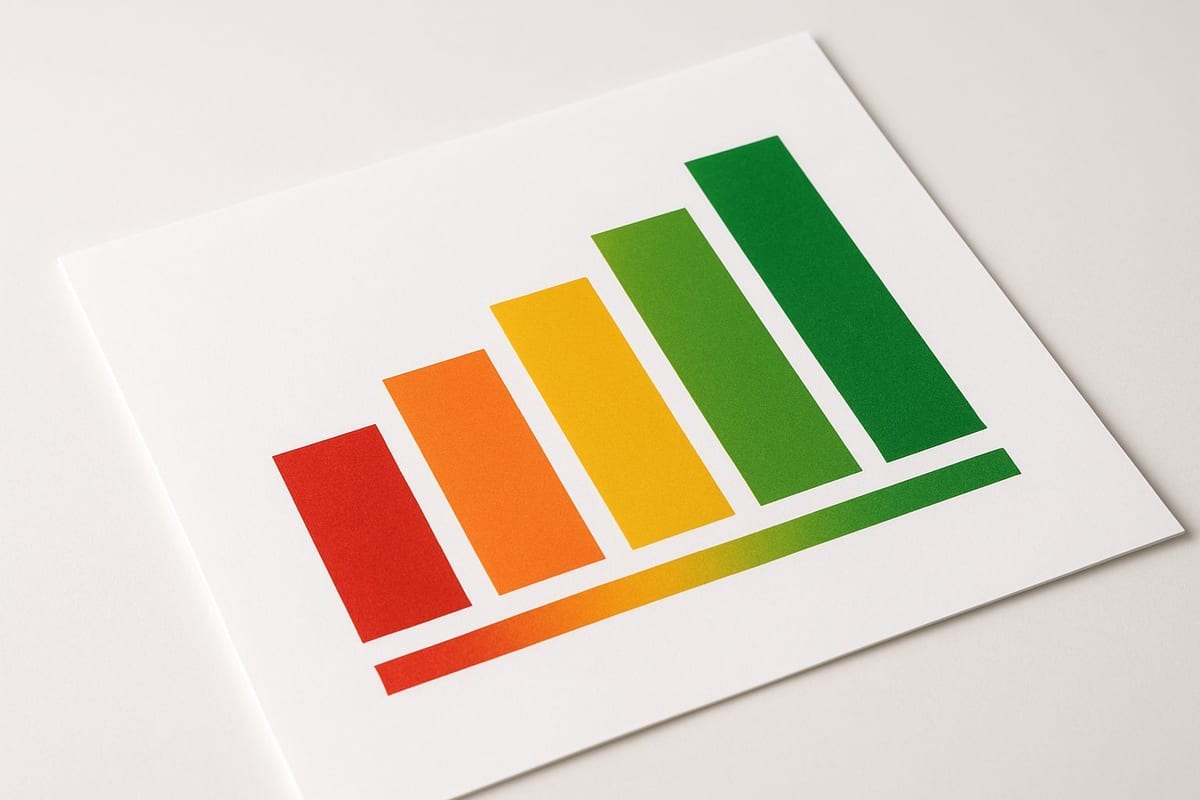
Credit utilization — how much of your available credit you’re using — makes up roughly 30% of your FICO score. It’s the second most important factor after payment history, and honestly, it’s one of the fastest levers I know for moving your score. It’s one of the few factors you can improve quickly.
What Credit Utilization Is
Credit utilization is calculated in two ways:
Overall utilization: Total balances across all cards ÷ Total credit limits across all cards
Per-card utilization: Balance on one card ÷ Credit limit on that card
Both matter. A card with a $5,000 limit and a $4,500 balance hurts your score even if your overall utilization is low.
Example:
- Card A: $500 balance / $2,000 limit = 25% utilization
- Card B: $200 balance / $5,000 limit = 4% utilization
- Card C: $0 balance / $3,000 limit = 0% utilization
Overall utilization: $700 / $10,000 = 7% ✓
Per-card: Card A is at 25%, which may still drag down the score slightly
What Counts as “Good” Utilization
The conventional wisdom is to stay under 30% — but this is the floor, not the target. Credit scoring models favor lower utilization at every level.
| Utilization | Score Impact |
|---|---|
| 0% | Can slightly hurt (no activity signal) |
| 1-9% | Optimal range |
| 10-29% | Good |
| 30-49% | Starting to hurt |
| 50%+ | Significant negative impact |
| 70%+ | Severe negative impact |
| 90%+ | Treat as maxed out |
The sweet spot is 1-9% — showing you use credit without leaning on it. A card with a $0 balance and $0 activity isn’t necessarily better than one with a $50 charge paid in full.
When Utilization Is Reported
Credit card issuers typically report your balance to credit bureaus once a month, usually around your statement closing date (not your payment due date).
This means if you always pay in full, you can still have high reported utilization. If your statement closes with a $2,000 balance on a $3,000 card, the bureaus see 67% utilization — even if you pay it in full the next day.
How to control reported utilization:
- Pay the balance down before the statement closes (not just before the due date)
- Check your card’s statement closing date in your account portal
- Or make multiple payments per month to keep the end-of-cycle balance low
How to Lower Your Credit Utilization
1. Pay Down Balances
The most direct path. Focus on high-utilization individual cards first (per-card utilization matters separately from overall).
2. Request a Credit Limit Increase
Increasing your credit limit with the same balance instantly lowers your utilization ratio. Most issuers allow limit increase requests through the app or online portal.
Important: Some limit increase requests trigger a hard inquiry on your credit report. Ask whether it’s a hard or soft pull before requesting.
Example: $1,500 balance on a $3,000 limit = 50%. Same $1,500 on a $6,000 limit = 25%. Request the increase, and utilization drops without paying a dime.
3. Open a New Credit Card
Adding a new card increases your total available credit, which lowers overall utilization — assuming you don’t add new debt.
Caution: Opening a new account causes a temporary score dip from the hard inquiry and new account age. Don’t open a card right before a major credit application (mortgage, car loan).
4. Don’t Close Old Accounts
Closing a credit card reduces your total available credit, which raises your utilization ratio. A card with a $0 balance and no annual fee is helping your score by existing — keep it open and use it occasionally so the issuer doesn’t close it for inactivity.
How Fast Does Utilization Affect Your Score?
Credit utilization is one of the fastest-moving factors in your score. Because it’s recalculated each month when issuers report:
- Pay down a high balance this month
- Statement closes, bureau updates
- Your score reflects the change within 30-45 days
This makes utilization a powerful lever if you need to boost your score for a specific purpose (mortgage application, car loan, apartment application). Paying down balances in the month before you apply can meaningfully move your score.
The “Zero Balance” Myth
Some people believe carrying a small balance month-to-month (and paying interest) helps their credit score. This is false.
Paying in full (or even before the statement closes) is best for both your score and your finances. Carrying a balance costs you interest and doesn’t provide any scoring benefit over a balance that’s paid in full by the reporting date.
Utilization vs. Payment History
Payment history (on-time payments) is 35% of your FICO score; utilization is 30%. But there’s a key difference:
Payment history is cumulative: A late payment from 2022 still affects your score in 2026, just with less weight over time.
Utilization has no memory: It’s calculated fresh each month based on current balances. Pay off a maxed card today, and by next month’s statement, that utilization is gone — the scoring model doesn’t remember it was maxed.
This makes utilization uniquely actionable. Unlike late payments (which you can’t erase), high utilization can be resolved quickly.
Key Takeaways
Keep overall utilization under 10% for optimal scoring. Keep individual cards under 30%, ideally lower. Pay down before statement closing if you need to lower your reported utilization quickly. Never close credit cards with no annual fee — they provide free utilization padding. Request credit limit increases periodically to keep the ratio manageable as your spending grows.
Check your utilization right now on any free credit score site (Credit Karma, Experian, your card’s app) — it’s probably the fastest-to-fix item on your credit profile if it’s high.
Keep reading
- Score Ranges
What Credit Score Do You Need for a First Credit Card?
A practical credit score range guide for beginners, newcomers, F-1 students, H-1B workers, and anyone building US credit from zero.
- Score Ranges
Credit Score Ranges Explained: What 600, 700, 750, and 800 Actually Mean
What your credit score number means, how lenders see it, and what changes at each tier.
- Score Ranges
How to Get Your Free Credit Report (And What to Look For)
You're entitled to a free credit report from all three bureaus every week. Here's how to get it and what to check.

Join the discussion
Share your take, ask a question, or swap tips with other readers. Be kind — we moderate.