Southwest Companion Pass 2026: How to Earn It and What Just Changed
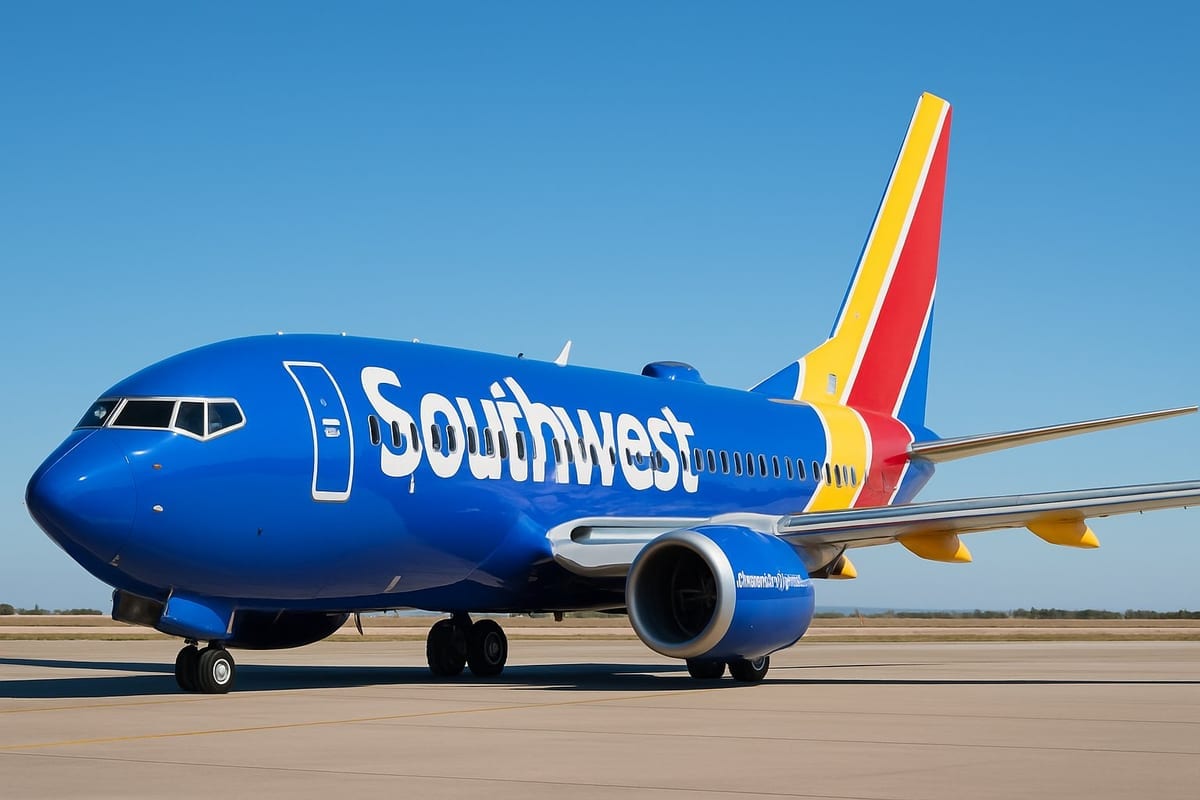
The Southwest Companion Pass is the single best deal in domestic air travel. Earn it, and one person of your choosing flies with you for free — you pay only the taxes and fees, which run about $5.60 each way on most domestic itineraries — every time you fly, on both paid and award tickets, for up to two years. There is no other major US airline benefit quite like it.
But 2026 brought the biggest shake-up in Southwest’s history. Open seating is gone, the fare menu was rebuilt, and the way Companion Pass holders board changed. If your mental model of Southwest is from a few years ago, parts of it are now out of date. Here is how the Companion Pass works today, how to earn it, and what the overhaul means for you.
What the Companion Pass actually gets you
Once you hold a Companion Pass, you designate one companion. Whenever you book a Southwest flight — whether you pay cash or redeem Rapid Rewards points — you can add that companion to the same flight for free, paying only the government taxes and fees. The companion can be added and removed per trip, so they only need to be on the flights you actually want them on.
The value compounds quickly. If you fly Southwest even a handful of times a year as a couple or a family, the pass effectively halves your airfare. Frequent flyers routinely extract several thousand dollars of value from a single pass.
Two details make it even better. First, the pass applies to award bookings, not just cash fares — so you can redeem points for your own seat and still bring your companion along for just taxes. Second, you can change your designated companion up to three times per calendar year, which gives families and couples real flexibility.
How long the pass lasts
This is the part that makes the Companion Pass uniquely valuable: you earn it for the rest of the calendar year in which you qualify, plus the entire following calendar year.
The timing math matters enormously. Qualify in January, and you get nearly two full years of free companion travel. Qualify in December, and you get a few weeks plus the next full year. Most strategic earners deliberately aim to hit the threshold as early in the year as possible to squeeze out the maximum window.
The two ways to qualify
Southwest gives you two paths to the Companion Pass in a single calendar year:
- Fly 100 qualifying one-way flights, or
- Earn 135,000 qualifying points.
For almost everyone, the flights path is impractical — 100 one-way segments means flying Southwest roughly twice a week, every week, all year. So the real game is the 135,000-points path.
Here is the key fact that makes the pass attainable for normal people: points earned from Southwest co-branded credit cards count toward the 135,000 qualifying points. That includes the card welcome bonuses and your everyday spending on the card. You do not have to fly your way there.
The credit card fast-track
The classic strategy is to earn a large chunk of the 135,000 points through credit card welcome bonuses, then top up the rest with spending.
Southwest offers both personal and business co-branded cards, and you can hold one of each — this is the detail most people miss, and I’d encourage anyone targeting the Pass to plan both applications simultaneously. Because welcome bonuses count as qualifying points, opening a personal card and a business card in the same calendar year — and meeting both minimum-spend requirements — can deliver a huge share of the 135,000 points in one shot, with regular spending covering the gap.
As of early 2026, Southwest’s personal cards have offered welcome bonuses in the range of 50,000 points and the business card has offered around 80,000 points after meeting minimum spend, though exact offers change frequently and some card bonuses carry application deadlines. Always check the current public offer before applying rather than relying on a number you read in an article. The strategy, not the specific bonus, is what stays constant: stack a personal and business bonus early in the year, then finish with everyday spend.
One important caution: Chase’s 5/24 rule applies to Southwest cards. If you have opened five or more credit cards from any issuer in the past 24 months, you will generally be denied. Plan your applications accordingly.
What the 2026 overhaul changed
On January 27, 2026, Southwest replaced its decades-old open-boarding system with assigned seating — the single biggest operational change in the airline’s history. Alongside it, the old fare names (Wanna Get Away, Anytime, Business Select) gave way to four new fare bundles: Basic, Choice, Choice Preferred, and Choice Extra.
For Companion Pass holders, two things are worth understanding:
Boarding is now tied to your seat. Under open boarding, your boarding position was a number you raced to claim. Now that seats are assigned, your companion’s boarding group is determined by their seat location or by any cardholder/elite-tier boarding benefit that applies — whichever is better. In practice, this means where your companion sits drives when they board.
You can pick your companion’s seat. When you add your companion to an itinerary, you can now select an available seat for them. That is a genuine improvement for families who, under the old system, had to scramble to sit together.
The fare-bundle change also affects point value. The cheapest bundle still delivers the best cents-per-point value when you redeem Rapid Rewards points, because Southwest prices award seats in direct proportion to the cash fare. Booking the lowest fare bundle stretches your points the furthest, just as booking the old Wanna Get Away fares did.
How much are the points worth
Rapid Rewards points are revenue-based, meaning their value is tied to the cash price of the ticket rather than a fixed award chart. Independent valuations generally put them in the range of 1.3 to 1.5 cents per point, with the best value coming from the lowest fare bundles and weaker value on premium fares.
Because the value is anchored to cash price, there are no “sweet spots” or wild outlier redemptions the way there are with some transferable-points programs. What you lose in ceiling, you gain in predictability: a points ticket is essentially a fixed discount off the cash fare, with no blackout dates and no change fees.
And the points themselves do not expire under Southwest’s current policy, so there is no pressure to burn them on a bad redemption to avoid losing them.
Is it worth chasing in 2026?
For anyone who flies Southwest even occasionally with a partner, child, or travel buddy, the Companion Pass remains one of the highest-value moves in domestic travel — and the credit card path means you do not need to be a road warrior to earn it. The 2026 changes did not weaken the core benefit; assigned seating and seat selection arguably make traveling with your companion smoother than before.
The strategy is straightforward: aim to hit 135,000 qualifying points as early in the calendar year as you can, lean on a personal-plus-business card bonus stack to get most of the way there, mind the 5/24 rule, and enjoy nearly two years of bring-a-companion-free flying.
Bottom Line
The Southwest Companion Pass lets one person fly with you for just taxes and fees on every flight — cash or points — for up to two years. Qualify by earning 135,000 points in a calendar year, which credit card welcome bonuses and everyday spending count toward, and earn it as early in the year as possible to maximize the window. The 2026 overhaul brought assigned seating and seat selection for your companion but left the core deal intact. If you fly Southwest with someone, it is still the best benefit going.
Part of our complete Points & Miles guide. Not sure what your points are worth? See the latest points valuations or run the numbers with our free calculators.
Keep reading
- Southwest Airlines
Southwest Stopped Replying to Customers on Twitter — Here's What That Means
Southwest Airlines hasn't publicly replied to customers on Twitter since mid-June 2026. What this signals about the new Southwest — and what it means for your travel
- Business Cards
How to Build US Business Credit as a Newcomer: First Steps
No SSN? No credit history? Here's exactly how H-1B workers, F-1 students, and new immigrants start building US business credit from zero.
- Savings Bonuses
How to Open a US Bank Account as a Newcomer: Checking Accounts Compared
No SSN? No credit history? Here's how to open a US checking account as an immigrant or international student, with fees, bonuses, and honest trade-offs.



Join the discussion
Share your take, ask a question, or swap tips with other readers. Be kind — we moderate.