Southwest Stopped Replying to Customers on Twitter — Here's What That Means
The airline that made Twitter fun just went quiet
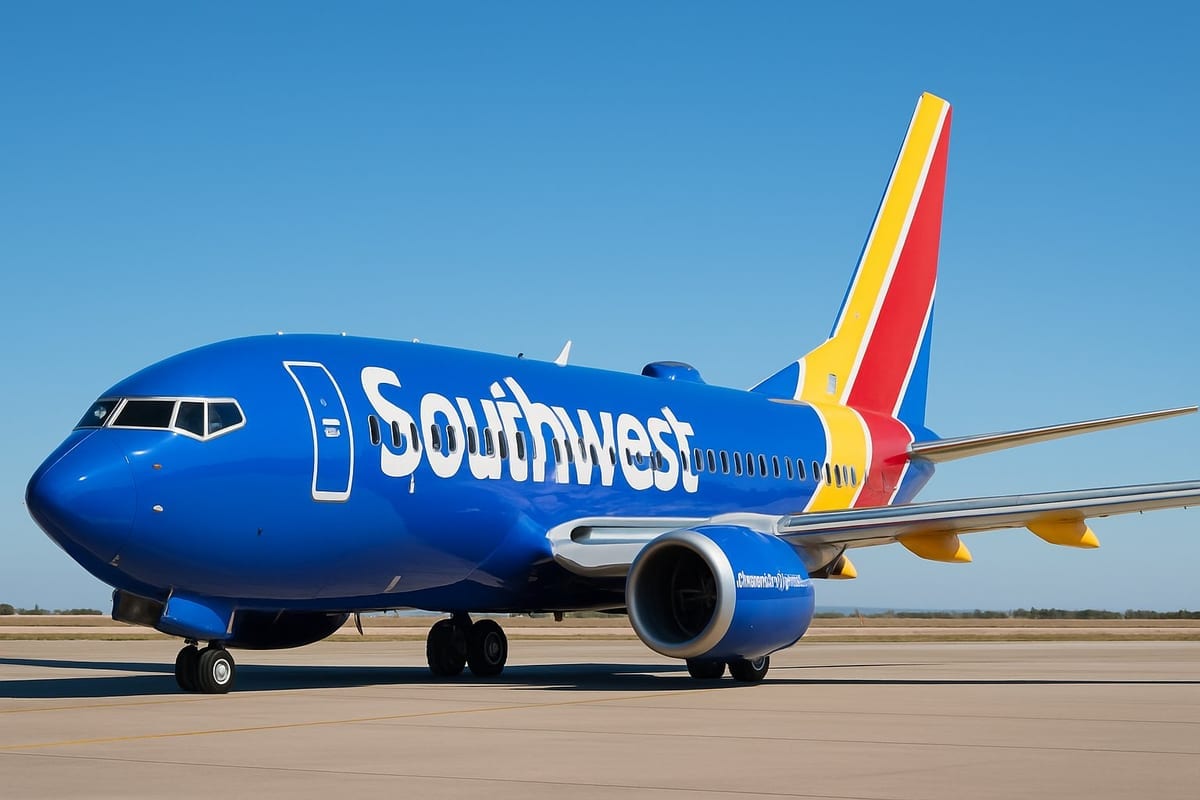
Southwest Airlines built a genuine cult following, partly on personality. The humor. The gate agents who’d rap safety instructions. The social media team that felt like actual humans who gave a damn. That Twitter presence wasn’t just marketing — it was a real differentiator, the kind of thing that made people choose Southwest even when fares weren’t the cheapest. Now it’s gone. Sometime around mid-June 2026, Southwest quietly stopped publicly replying to customers on Twitter, and it’s one more signal that the airline you grew up flying isn’t quite the same carrier anymore.
This might sound like a minor gripe about social media etiquette. It isn’t. It matters if you’re holding a Southwest credit card, chasing a Companion Pass, or counting on Rapid Rewards points for a future trip.
What made Southwest’s social presence worth noticing
For years, Southwest treated Twitter as a real customer service channel rather than a PR liability. That model required real humans crafting on-brand responses to complaints, compliments, and random questions alike. Whatever the cost, it was working: Southwest has held the number-one spot in the J.D. Power North America Airline Satisfaction Study among economy passengers for five consecutive years, including 2026. You don’t stack five straight years at the top of that ranking by accident.
The silence that started around mid-June 2026 is jarring precisely because that reputation was so carefully built.
A company in the middle of a very deliberate reinvention
The Twitter pullback isn’t random. Southwest is executing a major strategic pivot, and the social media shift fits the pattern.
In May 2025, they introduced baggage fees — $35 for a first checked bag, $45 for the second at launch. Those fees have since increased: effective April 9, 2026, for new bookings, the first checked bag runs $45 and the second runs $55. Then in January 2026, they dropped open seating and switched to assigned seats, a fundamental change to how the product works.
On the tech side, Southwest signed a deal with Amazon Web Services in June 2026 to modernize its infrastructure, with plans to deploy AI agents across customer experience and operations and a target of a fully cloud-based environment by 2028. They also brought in a new Chief Digital and Marketing Officer, Sabrina Callahan, in April 2026, with a mandate to reshape the airline’s digital strategy. A new agency partnership with Foundation Media Partners, inked in June 2026, is focused on cultural relevance and storytelling.
Read together, this is a carrier consciously moving toward more centralized digital solutions and self-service over direct, public social media engagement. Whether that’s cost-cutting dressed up as transformation or genuine modernization, the result for the average traveler is the same: fewer humans in the loop.
What this costs you as a traveler — practically speaking
Let’s be concrete. Say you’re flying Southwest from Chicago Midway to Las Vegas with one checked bag each way. Under the old model: no baggage fees, open seating, and if something went wrong, a reasonably visible social channel to escalate through. Under today’s model: $45 each way for that first checked bag — $90 round-trip per person — and if your bag gets lost and you tweet at them, you may be talking to no one public-facing at all.
For a family of four each checking one bag round-trip, that’s $360 in baggage fees that didn’t exist before May 2025, and that figure is based on the current $45 first-bag rate. Add a second bag per person and you’re over $700 round-trip in fees alone. That’s real money — enough to swing a fare comparison back toward a competitor, which is exactly what Southwest’s old baggage policy was designed to prevent.
For Rapid Rewards members, none of this changes the points math directly. But it does shift the overall value calculation. The appeal of Southwest’s loyalty program was always partly the surrounding experience — the policy flexibility, the no-fee changes, the baggage perk. Strip enough of those away and Southwest has to compete on price and schedule alone, which is a harder game against carriers that have been playing it longer.
The AI pivot might actually help — eventually
I’m not dismissing the AWS deal as pure spin. There’s a real scenario where smarter self-service tools — faster rebooking, proactive disruption notifications, better refund processing — genuinely improve your experience more than a public social reply ever did. If Southwest’s AI can rebook you on the next flight the moment yours cancels and push you a notification before you’ve even checked the departures board, that’s more useful than any witty response.
But the brief is clear: Southwest plans to deploy AI agents and is targeting a fully cloud-based environment by 2028. That’s a roadmap, not a current reality. The concern right now, in mid-2026, is the gap — pulling back on public Twitter engagement before the replacement infrastructure is fully in place means there’s a period where customers get less service coverage, full stop.
What it means for your Southwest strategy right now
If you’re a Companion Pass holder or actively chasing one, the core math on that benefit hasn’t changed — two people flying for the price of one (plus taxes and fees) is powerful regardless of what’s happening on social media.
For trip protection: Southwest’s no-fee change and cancellation policy has historically been a differentiator over most carriers, but verify current terms directly with Southwest, since policies have been in flux alongside everything else. When in doubt, use the app or website to manage changes rather than waiting on a social response that likely won’t come.
And document everything in writing. Without a visible public thread creating accountability, if something goes wrong you want email confirmations, app screenshots, and case numbers. A paper trail you control matters more now than it did when disputes sometimes resolved themselves in a public forum.
Frequently asked questions
Has Southwest completely abandoned Twitter for customer service?
As of mid-June 2026, Southwest appears to have stopped publicly replying to customer tweets, a significant departure from their historical approach. No formal announcement has been made. Direct messages may still be an option, but the visible, public engagement that once defined their social presence has stopped.
What are Southwest’s current baggage fees?
Southwest introduced baggage fees in May 2025. Effective April 9, 2026 for new bookings, the first checked bag costs $45 and the second costs $55. These fees replaced the long-standing policy of complimentary checked bags. For any card-specific baggage benefits, check directly with your card issuer for current terms.
Is Southwest still a good airline for Rapid Rewards members?
The Companion Pass remains a valuable benefit for frequent Southwest flyers, and Rapid Rewards points still offer solid domestic redemption options. What’s changed is the surrounding experience — assigned seating, higher baggage fees, and a service model that’s moving away from the high-touch approach that made the program feel distinct. Whether that trade-off works for you depends on how much you valued those softer benefits versus the points math itself.
What’s the best way to reach Southwest customer service now?
The app and website handle many routine tasks — rebooking, cancellations, refunds. For complex issues, the phone line remains an option. What’s no longer reliable is a public Twitter reply; based on behavior since mid-June 2026, don’t count on that channel for resolution.
Bottom line
Southwest stopping Twitter replies is a small thing that tells a bigger story. The carrier is deliberately shedding the personality-driven, high-touch model that made it distinctive and replacing it with something more automated and more conventional. That’s not inherently wrong — plenty of airlines compete successfully on efficiency rather than charm — but Southwest is attempting something tricky: adding fees, changing core policies, and automating customer touchpoints while somehow holding onto the satisfaction scores it’s built over years. The J.D. Power ranking is impressive, and it’s real. But satisfaction surveys are lagging indicators. The changes customers are absorbing today will show up in those numbers later.
Keep reading
- Southwest Airlines
Southwest Companion Pass 2026: How to Earn It and What Just Changed
The Companion Pass lets one person fly with you for free all year. Here's how I'd approach earning it in 2026 — and what the new assigned-seating overhaul changed.
- Business Cards
How to Build US Business Credit as a Newcomer: First Steps
No SSN? No credit history? Here's exactly how H-1B workers, F-1 students, and new immigrants start building US business credit from zero.
- Savings Bonuses
How to Open a US Bank Account as a Newcomer: Checking Accounts Compared
No SSN? No credit history? Here's how to open a US checking account as an immigrant or international student, with fees, bonuses, and honest trade-offs.

Join the discussion
Share your take, ask a question, or swap tips with other readers. Be kind — we moderate.