10 Lessons Every New Points Collector Learns

There is a learning curve to collecting points and miles — and honestly, everyone makes the same mistakes. Most people who have been at it for a few years can point to a handful of early missteps they made or close calls they narrowly avoided. The good news is that these lessons are predictable. They come up so consistently that you can learn them from others rather than from personal experience.
Here are ten of the most common insights new points collectors acquire, usually in the first year or two.
1. The Welcome Bonus Is the Most Important Number on Any Card
New collectors often fixate on the earning rate — 2x on travel, 3x on dining, and so on. These matter, but they pale next to the welcome bonus for most people’s first year on a card. The bonus is often worth more than a full year of organic earning. Evaluate cards by their welcome bonus first.
2. Points Are Not Created Equal
A point from one program is not worth the same as a point from another. Chase Ultimate Rewards points, Amex Membership Rewards points, and Hyatt points all have different redemption values and flexibility profiles. Before comparing balances across programs, understand what each currency can actually do.
3. Transferable Points Are More Valuable Than Airline or Hotel Co-Branded Points
This surprises many beginners. A co-branded airline card earns miles that can only be used with that airline and its partners. A card that earns transferable points can feed into multiple airline and hotel programs, giving you far more optionality.
The Chase Sapphire Preferred and the American Express Gold Card are popular precisely because their currencies are transferable.
4. Never Transfer Points Without Confirmed Award Availability
This is one of the most painful lessons, and it is worth learning from other people’s experience rather than your own. If you transfer points to an airline program and then cannot find the award you wanted, the points are gone — transfers are almost always one-way. Always find the award seat first, then transfer.
5. Award Charts Change — and Not Always in Your Favor
Hotel and airline programs periodically restructure their award charts, often increasing the points required for popular redemptions. A target redemption that costs a certain number of points today might cost significantly more in a year. This does not mean you should redeem impulsively, but it does mean that sitting on a large balance without a plan carries its own risk.
6. Annual Fees Are Not the Enemy
Many beginners avoid cards with annual fees on principle. This is understandable but often counterproductive. A card with an annual fee typically offers a welcome bonus, travel credits, and ongoing benefits that collectively exceed the fee — sometimes by a wide margin. The relevant question is not whether a fee exists but whether the value you receive exceeds it.
7. You Can Lose Points to Expiration or Account Closure
Points do not always last forever. Some airline and hotel programs expire miles or points after a period of inactivity. Closing a credit card account that holds transferable points — without first moving those points somewhere — can also result in losing them. Know the expiration rules for every program where you hold a balance.
8. Credit Score Health Comes First
Points collecting only makes sense if you pay your balance in full every month. Carrying a balance and paying interest eliminates any value the points provide and then some. Before opening a travel card, confirm that your credit habits support paying in full. Points are a poor trade for credit card interest.
Separately, applying for new cards does affect your credit score temporarily. Beginners who apply for several cards in quick succession may see a short-term dip. Spacing applications thoughtfully and monitoring your credit regularly are standard practices in the points community.
9. Flexibility Is More Valuable Than Loyalty
New collectors sometimes fixate on a single airline or hotel program and try to maximize status with it. This can pay off for frequent business travelers who fly the same routes repeatedly. For most people, however, program flexibility — the ability to transfer points to whichever partner makes sense for a given trip — is worth more than chasing status on one carrier.
10. The Best Redemption Is One You Actually Take
Points sitting in an account are worth zero until redeemed. Some collectors accumulate massive balances and then wait for the perfect redemption — a first-class suite on a flagship airline, a bucket-list resort. There is nothing wrong with saving for a specific goal. But if the wait stretches for years and life circumstances shift, those points may never get used at their intended value.
Have a target redemption in mind. Give yourself a timeframe. And if a solid (if not perfect) opportunity arises, it is often better to use the points than to let the balance sit indefinitely while award charts change around it.
A Note on Getting Started
The learning curve is real, but it is also shorter than it looks. Most new collectors who engage seriously with these concepts for a few months develop a solid working knowledge. The community of points enthusiasts is large and generally helpful — forums, blogs, and comparison tools are widely available.
The lessons above do not require painful personal mistakes to absorb. They are simply the pattern that emerges when enough people learn this system.
Bottom Line
Every new points collector eventually learns these ten things. Learning them early means fewer wasted transfers, fewer expired balances, and more effective use of every card in your wallet. The fundamentals are not complicated — consistency and a little planning go a long way.
Keep reading
- Lessons Learned
Common Credit Card Mistakes (and How to Avoid Them)
These are the credit card errors that cost travelers real money — and the simple fixes that prevent them.
- Credit for Immigrants
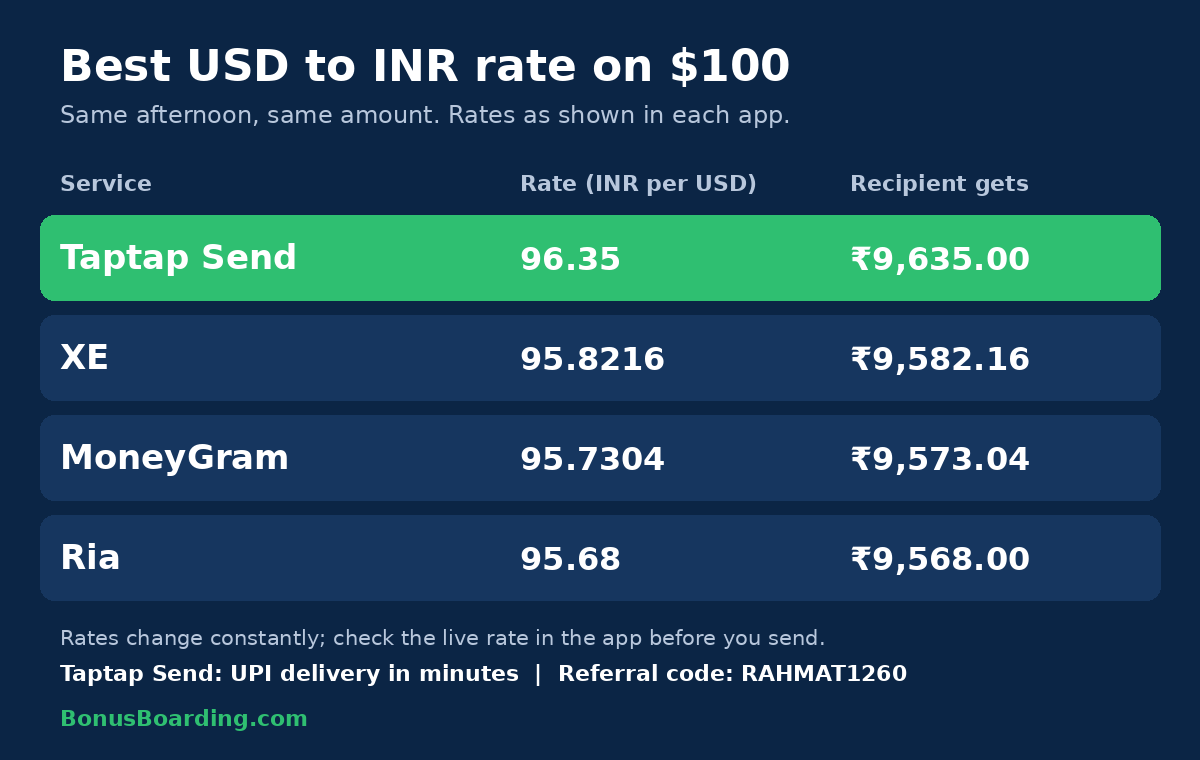
Taptap Send Review: Best USD to INR Rate Compared
What Taptap Send is, how US-to-India transfers work, and how its USD to INR rate compared with XE, MoneyGram and Ria on the same afternoon.
- Build Credit
How to Build US Credit From Zero: Secured Cards, Loans, and Quick Wins
No SSN? Thin file? Here's the honest, step-by-step roadmap to building US credit fast — with real numbers and card picks for newcomers.
Join the discussion
Share your take, ask a question, or swap tips with other readers. Be kind — we moderate.